
Eric Felt

Eric Felt, D.D.S

801-533-9879
Directions
  • Services
    • Cosmetic Dentistry
      • Dental Veneers
      • Teeth Whitening
    • General & Family Dentistry
      • Dental Cleanings & Exams
      • First Dental Visit
      • Periodontal Maintenance
      • Root Canal Therapy
      • Sports Mouth Guards
      • Tooth Extractions
      • Toothache Treatment
    • Emergency Dental Care
    • Pediatric Dentistry
      • Fluoride Treatments
      • Pediatric Dental Crowns
      • Pediatric Dental Fillings
      • Pediatric Emergency Dental Care
    • Restorative Dentistry
      • Dental Bridges
      • Dental Crowns
      • Dental Fillings
      • Dentures
  • About
    • Meet the Doctor
    • Meet the Team
    • Office Tour
    • Reviews
    • Blog
  • Directions
  • Patient Info
    • Financial Options
    • Make a Payment
    • Patient Forms
    • Reviews
    • Dental Care Special Offers
  • Contact Us
  • 801-533-9879

Can Your Dentist Tell If You Don’t Brush Or Floss? 3 Surprising Ways

Home | Dentist | Page 17

Request Appointment

Picture this: you typically only brush your teeth in the morning and floss never. However, the day of your dental cleaning arrives, and you floss thoroughly (even though your gums bleed) and brush your teeth for a solid 5-10 minutes in the hopes that it’s enough to fool your dentist into thinking that you take care of your teeth as recommended.

Does this actually work? Or can your dentist still tell if you don’t brush or floss as you should?

don't brush or floss

Spoiler Alert: Your Dentist Can Tell If You Don’t Brush Or Floss As You Should

Your efforts to disguise the fact that you don’t brush or floss won’t hide this from your dentist. It’s no use trying to lie to your dentist when the state of your mouth snitches on you. 

If you struggle to maintain recommended oral health habits, talk to your dentist about it. They’re there to help you, however they can. They don’t want to lecture you any more than you want to be lectured!

Here is what you need to know about why your dentist can tell if you don’t brush or floss as you should. 

Dentists Can Read Your Mouth Like A Book

So, don’t even bother trying to lie to them – they’ll know. Dentists can decipher more than if you don’t brush or floss from the state of your mouth.

Dentists can tell:

  • How often/how thoroughly you floss
  • Whether you don’t brush your teeth enough… or you brush them too much
  • If you bite your nails
  • If you grind your teeth/clench your jaw often
  • If you have potential for diabetes
  • If you vape or use tobacco
  • If you have dry mouth
  • If you sucked your thumb a lot
  • If you have oral cancer
  • If you have acid reflux
  • If you have a sinus infection
  • If you drink too much alcohol
  • If you drink too much soda or sports drinks
  • If you have sleep apnea
  • If you have a vitamin deficiency
  • If you have an eating disorder

Shocking, isn’t it? All those years of school and experience required to be able to practice as a dentist definitely pay off in how much your dentist can end up being able to help you with.

We’ll go into further detail about why and how your dentist can detect these things below.

How Your Dentist Can Do This
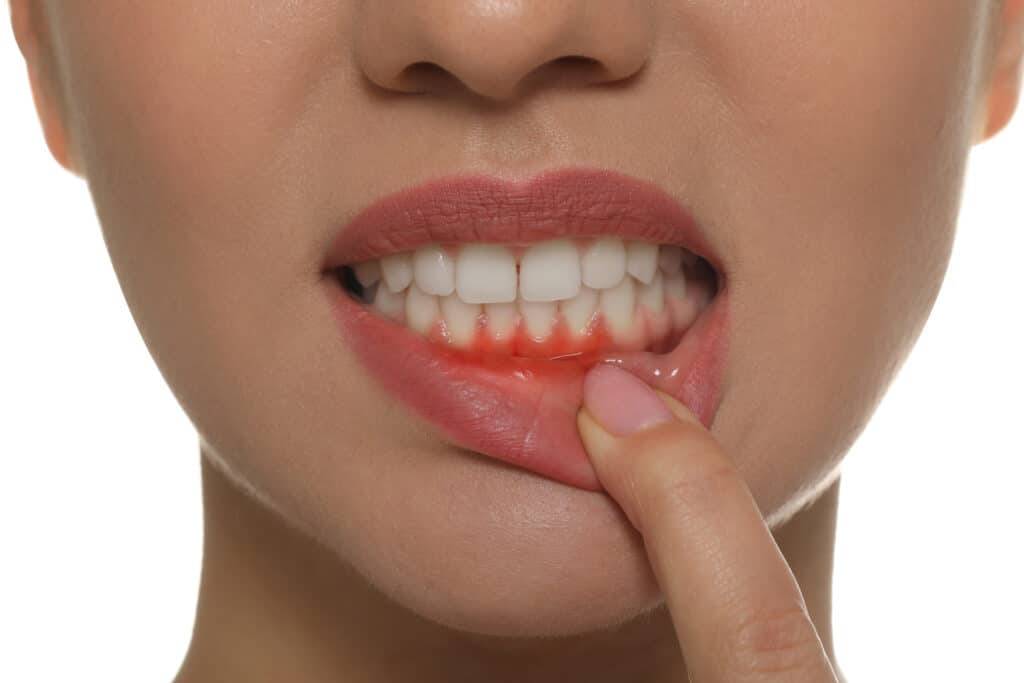
don't brush or floss

#1. Your Gums

Healthy gums don’t bleed. Your gums are a dead giveaway as to whether or not you brush or floss as you should. If your gums are bright red and/or bleed when you floss, they’re not healthy. You may also have large plaque deposits under your gums – which wouldn’t be there otherwise. 

Your gums should be a fleshy pink that doesn’t bleed. Flossing once before your dental cleaning isn’t enough to reverse gum disease – it needs to be a regular habit.

Gum disease can occur simply because you don’t floss or don’t floss enough. It can also be an early indicator for health issues, like diabetes.

#2. Your Teeth

Stained, chipped, or ground-down teeth all give away dental health issues. Plus, if you have dental decay that has progressed far enough, cavities can form visible holes in your tooth enamel. Plaque can build up if you don’t brush or floss as you should. Drinking lots of sodas or sports drinks can cause a specific pattern of wear on your tooth enamel, while alcohol causes you to have decreased saliva production.

If you have an eating disorder, acid reflux, bruxism, you bite your nails, you drink a lot of alcohol or sodas or sports drinks, or you either don’t brush your teeth enough or you brush them too much, your dentist will be able to tell. 

#3. Your Mouth As A Whole

Your dentist doesn’t just look at your teeth. They’ll also look for inflammation, sores, lumps, saliva production, the condition of your tongue, tooth formation and alignment, cracked lips, and more.

For instance, if you sucked your thumb a lot as a child, this could have impacted how your teeth aligned. If you have a vitamin deficiency, you may have bleeding gums, a sore tongue, cracked lips, and other such issues. If you have oral cancer, this can show on your tongue and around your mouth.

Do You Need Help Establishing Good Oral Health Habits?

don't brush or floss

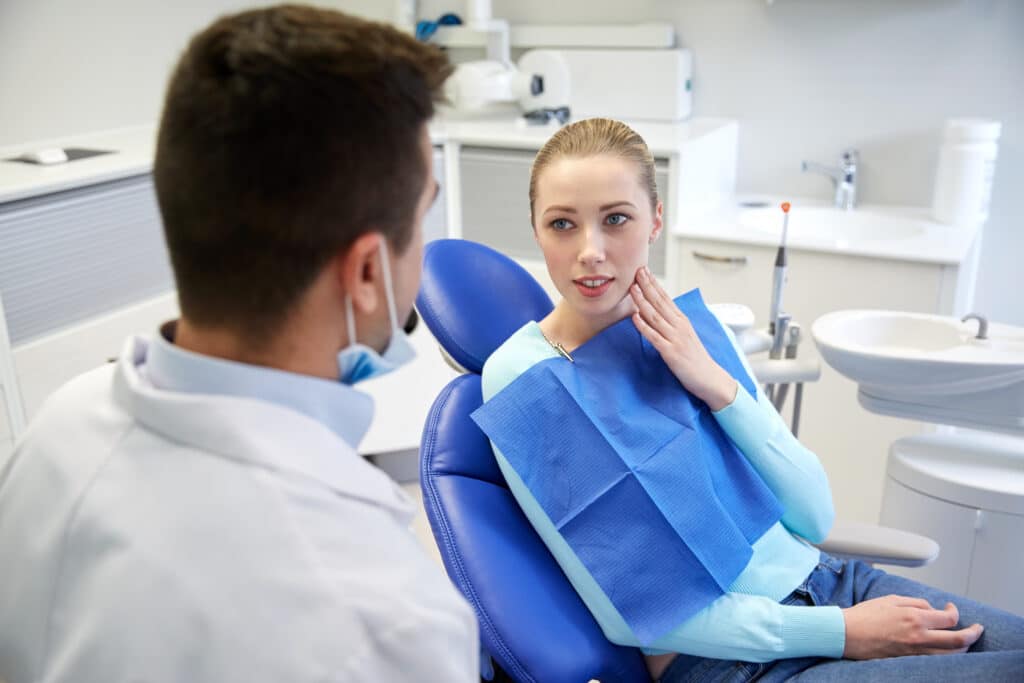
So, your dentist can tell if you don’t brush or floss as you should. If this is you, you’re probably familiar with the questions of how often you’re brushing and flossing. Rather than attempting to lie when your dentist can tell you’re lying, be honest with them. If there’s some reason why you aren’t brushing or flossing as you should, talk to your dentist about it.

For instance, many people don’t floss because it hurts and their gums bleed when they do. As such, you may think flossing is doing more harm than good. Your dentist would likely explain to you that the reason for this is because of gum disease – which is reversible if you take up good flossing habits. However, if left alone, it could escalate into severe gum disease, which can result in you losing your teeth among other problems.

Your dentist wants to help you however they can. Whether it’s just laziness or there’s a legitimate reason why you struggle to brush or floss as you should, don’t be afraid to let your dentist know. Chances are, they’ll be able to provide you with advice to make implementing these habits easier for you.

Attentive Dental Care In Cottonwood Heights

Eric Felt, D.D.S., is here to help you with your dental health. Whether you need a regular dental cleaning, emergency dental care, or restorative dental services, count on us to help you restore your smile and improve your oral health. Contact us today to schedule an appointment or for any questions about our services that you may have.

Filed Under: Dentist

dental anxiety

Dental anxiety is very common, and causes many people to avoid the dentist entirely. There are many sources for such anxiety, from fear of judgment to not liking not being in control and more. Fortunately, there are methods for dealing with dental anxiety.

Here is what you need to know about common reasons why people have dental anxiety and what you can do to combat it. 

Will My Dentist Judge Me?

For the condition of your teeth? Probably not! If you are rude or difficult to work with… Probably, yes, but for your (lack of) manners, not your teeth. 

Dentists are here to help you, not judge you. Dentists love when patients come in for cleanings, because then they can see improvement or keep tabs on issues and prevent them from worsening. Restorative work fixes damage and decay, so don’t worry about if your dentist will judge you for having them – your dentist will more likely be glad to see them, as they indicate you had the decay treated.

Dentists understand how difficult it is for many people to even make the appointment. They want to help you however they can. Even dentists get dental problems, after all.

But I Haven’t Been To The Dentist In Years

If you haven’t been to the dentist in years, your dentist will probably be happy that you made the appointment to get your teeth checked. A good dentist won’t guilt-trip you about it, but will help you and do what they can to make going to the dentist easier for you. 

They may ask you what’s deterred you from seeing the dentist in order to figure out how best to help you. If it was finances, more and more dentists offer financing options. If it was dental anxiety, many dentists offer sedation and other such options to help with dental anxiety. If you just don’t think dental cleanings are that important, your dentist will likely educate you about this. 

But I Always Have Dental Problems

Eric Felt DDS Cottonwood Heights Utah tooth pain

If you consistently have dental problems, your dentist and dental hygienist will work with you in order to figure out what’s going on. Even if you take stellar care of your teeth, you may still get cavities and the like. 

This can be because of anything from the bacteria naturally present in your mouth to your genetics to underlying health conditions and more. You may also having seemingly harmless habits that are hurting your dental health, like snacking and sipping on beverages throughout the day, using your teeth as tools, and the like. 

For instance, some people never get cavities even if they don’t care for their teeth because their genes are just that good, while others routinely struggle with dental problems due to genetic issues. 

What If My Teeth Are The Worst My Dentist’s Ever Seen?

First off, this is highly unlikely. Dentists see all sorts of different dental issues. It is far more likely than not that your dentist has seen plenty of people with worse teeth than you. 

If you don’t mind graphic images, you can do a Google search about the worst teeth. Even if your teeth match such pictures, you can take comfort in knowing that modern medicine has come a long way and your dentist can help you restore your teeth – and will probably delight in the challenge and in being able to help you smile again!

What Can I Do If I Suffer From Dental Anxiety?

#1. Let Your Dentist Know

First things first, let your dentist know! Dental anxiety is very common. Your dentist shouldn’t judge you for being anxious and should have options to help you. More and more dentists are offering sedation dentistry for this precise reason of helping people stay relaxed and calm throughout their appointment. 

#2. Have Emotional Support

You may also consider taking someone with you for emotional support. This person can talk to you about your interests and things throughout your appointment. If you’re too anxious to talk to your dentist about your dental concerns, your loved one can relay your concerns to them for you.

#3. Bring A Distraction

You may also bring a distraction with you, like a stress ball, or ask your dentist if they have any distractions. Many dentist’s offices now have TVs in treatment rooms so that patients can get their mind off the treatment by watching a movie or show. You may also ask if it’s okay if you play music on headphones. 

#4. Agree On A Signal

You can ask your dentist to agree on a signal if your dental anxiety is because you can’t talk or move during the procedure. That way, when you give the signal, your dentist will know to pause so you can take a break. 

#5. Figure Out The Source Of Your Anxiety

Ask what you’re afraid of/what about the dentist is making you anxious. Is it fear of pain? Anxiety about some dental condition that would be expensive to fix? Embarrassment about the state of your oral health? A bad experience with a past dentist? Do you not like not being in control?

If you can pinpoint why the dentist makes you so anxious, you can work to combat this anxiety. Your dentist is here to help you however they can. For instance, if your dental anxiety is about fear of pain, your dentist may explain to you that dental treatments are meant to relieve pain, not cause it, and that anesthesia is used to ensure you can’t feel anything during a filling or root canal or other such treatments. 

dental anxiety

If your dental anxiety is severe, you may consider seeing a therapist. They will be able to work through your anxiety with you and help you overcome it. 

Do You Need To Schedule A Dental Appointment?

Eric Felt, D.D.S., is here for you. We provide all sorts of dental services, from routine cleanings to emergency care. Contact us today to learn more about how we can help you maintain your oral health.

Filed Under: Dentist

Many people dread going to the dentist, even though it’s a necessary part of your oral hygienic care. You don’t want to be told you have cavities even though you swear you were taking good care of your teeth. If you’re someone who tends to get cavities, you may even worry about whether or not you can get multiple cavities in the same tooth. 

Yet, seeing the dentist on a regular basis can help you prevent further cavities in the future. It also gives you the chance to ask any burning dental questions you may have, such as whether or not you can get multiple cavities in the same tooth. 

Can The Same Tooth Get Multiple Cavities?

Unfortunately, the answer to this question is yes. Your tooth has 5 sides that could get cavities. The top, the front, the back, and then either side of the tooth. It is indeed possible for you to get multiple cavities in the same tooth.

A single tooth can also experience recurrent tooth decay. What this means is when you get a cavity under an existing dental filling or restoration. This can happen due to leaks and cracks in the restoration, as can occur if you clench and grind your teeth. 

Can You Get Multiple Fillings In One Tooth?

multiple cavities in the same tooth

While you can indeed get multiple cavities in the same tooth, you can’t always get multiple fillings in the same tooth. This is because there may not be enough space for multiple fillings in a single tooth. In order to fill a cavity, there needs to be enough tooth structure. If you have multiple cavities in one tooth, your dentist may not have the room to remove the decayed areas and place fillings.

If a dentist cannot fill a cavity, they will likely recommend a dental crown or another type of restoration. This way, they can remove the cavity and keep your tooth protected from further decay. Your dentist will always do whatever they can to save your natural tooth. Dentists only recommend tooth extraction when nothing more can be done to save your natural tooth.

What Can Cause Multiple Cavities In The Same Tooth?

We have it drilled into our heads since we are children that we need to brush our teeth twice a day for at least two minutes each time, floss once a day, and see our dentist for professional cleanings as recommended. However, many people don’t do this. 

Not taking proper care of your teeth can lead to you having multiple cavities in the same tooth. However, you could also get multiple cavities in the same tooth even if you brush and floss religiously. This can often happen if you have a sweet tooth or a fondness for soft drinks or acidic foods or beverages.

Other factors that increase your risk of tooth decay include:

  • Dry mouth
  • Dehydration
  • Smoking
  • Oral tobacco products
  • Excessive alcohol use
  • Bruxism
  • Genetics

For instance, you could have a cavity near your gumline because of your fondness for diet cola and a cavity between two teeth because you either don’t floss or don’t floss correctly.

What To Do If You’re Concerned About Cavities

If you have any concerns about your likelihood for developing cavities, it’s a good idea to talk to your dentist. 

Often when we get cavities, we’re disappointed but not necessarily surprised. We can usually think of why we got the cavities, whether because we really aren’t flossing daily or because we have an addiction to our daily cup of coffee. 

However, in other cases, you can be shocked and confused, because you swear you take amazing care of your teeth. Usually, talking with your dentist about potential reasons for your cavities can uncover what likely happened. For instance, maybe you take melatonin gummies after brushing your teeth or perhaps while you floss, you are not flossing correctly.

Some people are more prone to cavities than others. Talking with your dentist helps you to uncover and understand your risk factors, as well as what can be done in order to prevent future cavities.

Generally speaking, if you want to prevent cavities, you want to brush your teeth twice a day, floss once a day, and see your dentist as recommended, usually every 6 months. You also want to stick to a healthy diet and stay hydrated. Following your dentist’s recommendations for any tooth decay factors can help you prevent multiple cavities in the same tooth.

Are You Concerned About Cavities?

Eric Felt Dental is here to help! Contact us today to schedule a dental cleaning and let us help you keep your teeth as healthy as possible. 

Filed Under: Dentist

  • « Previous Page
  • 1
  • …
  • 15
  • 16
  • 17
  • 18
  • 19
  • …
  • 22
  • Next Page »
office image
white logo

Contact

TEL: 801-533-9879

6800 S. Highland Drive, Suite 100
Cottonwood Heights, UT 84121

Hours

Monday 7:00 AM - 5:00 PM
Tuesday 7:00 AM - 5:00 PM
Wednesday 7:00 AM - 5:00 PM
Thursday 7:00 AM - 5:00 PM
Friday 7:00 AM - 5:00 PM*
Saturday Closed
Sunday Closed
*Third Friday of every month. Call for more information.

2026Eric Felt, D.D.S | All Rights Reserved | Privacy Policy | Terms | XML Sitemap | Sitemap | Site by PDM

https://ericfeltdds.wpengine.com/wp-content/uploads/2022/07/hero-full-video.mp4